ROPA, retention and disposal
ROPA register
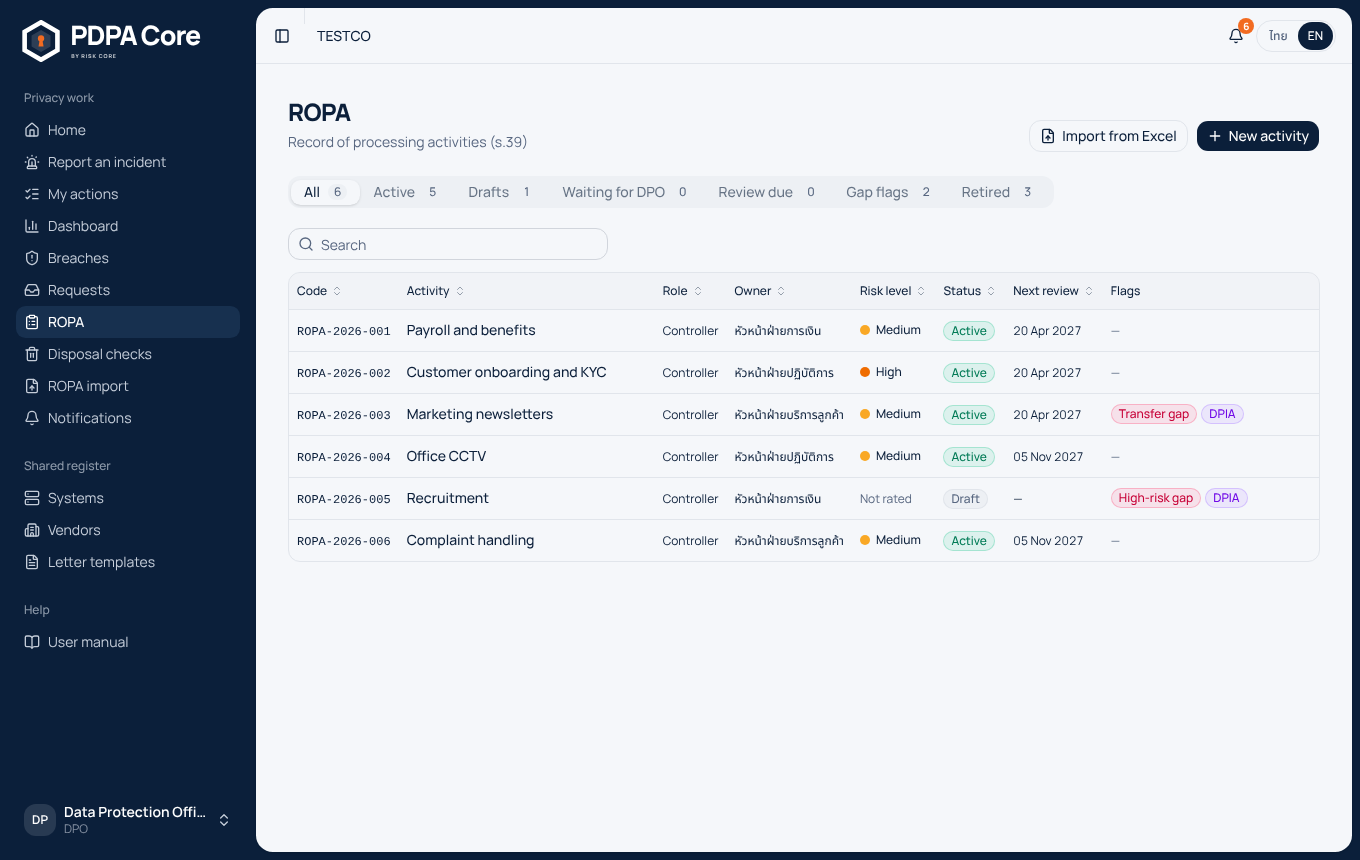
Section titled “ROPA register”The register lists every processing activity with its code (ROPA-year-number), status, risk band and flags. Tabs: All, Active, Drafts, Waiting for DPO, Review due, Gap flags, Retired.
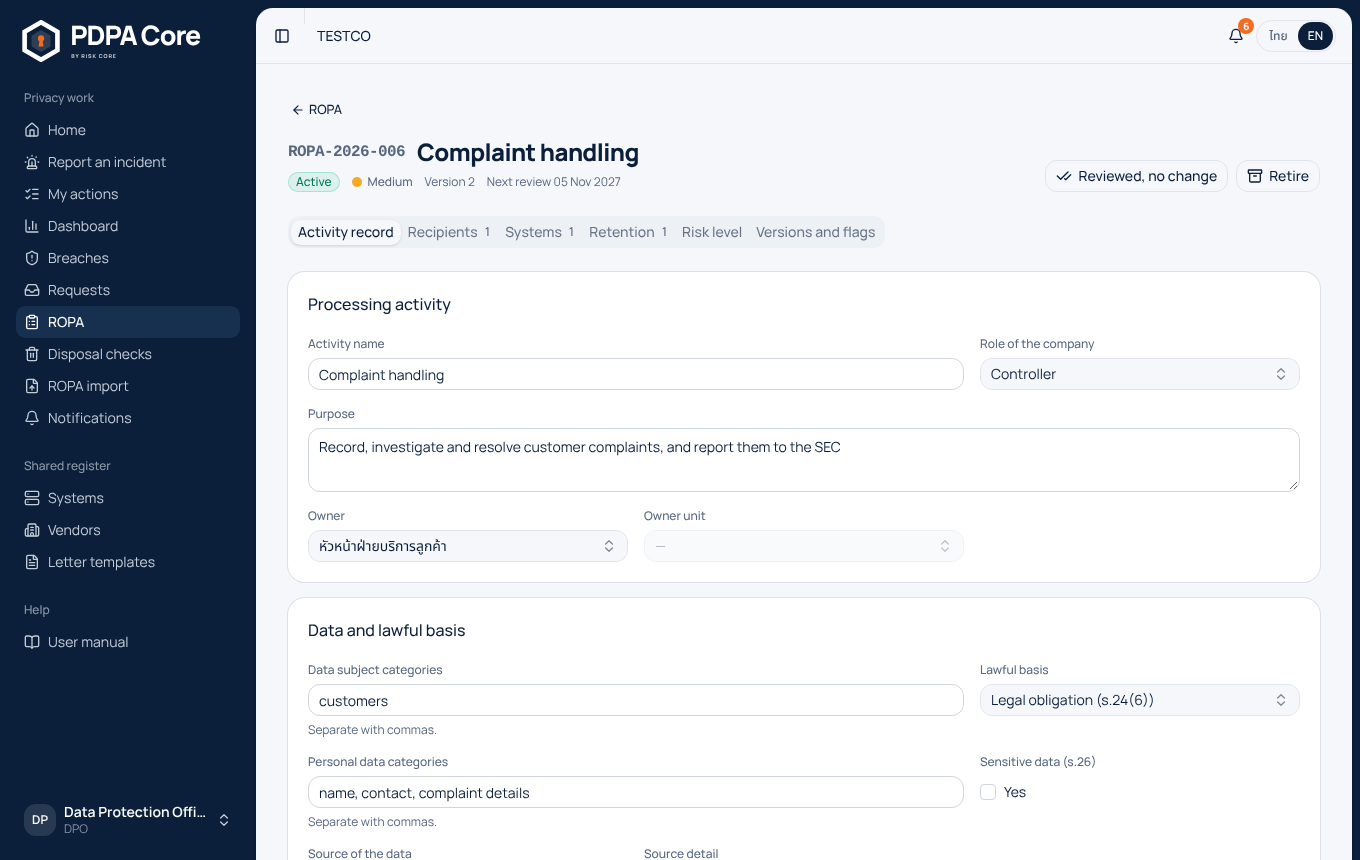
The activity record carries the section 39 fields: name and purposes; the company's role (controller, processor for a named controller, or Joint controller); owner unit and owner; data subject and personal data categories; sensitive data with its section 26 condition; the lawful basis; the source of the data; retention; security measures; privacy notice reference; consent tool; recipients with country and, outside Thailand, the Transfer safeguard; and the systems that hold the data.
Versions. A new activity is a draft until the DPO approves its first version. After that, a change to the main fields goes to the DPO as a pending version with its reason; the DPO sees the changes field by field and approves or rejects it with a reason. Every version is kept. Recipients, systems and retention rules are edited directly and recorded in the next version.
Flags are computed, never typed: High-risk gap (no lawful basis or no retention period), Transfer gap (a recipient abroad without a safeguard), DPIA prompt, LIA prompt, update before launch (a planned change on the change log touches the activity), review overdue.
Annual review. Reviewed, no change stamps a review version; the next review falls due at the company's interval (at most 12 months). A review 30 days overdue raises an action on the activity owner.
Risk level. The DPO team rates likelihood and impact on the company's active criteria set; the band and its colour come from the risk matrix. A company without ERM Core gets a default PDPA criteria set when the module is switched on. Under the rating, Link a risk links the activity to the RCSA risk that carries its privacy risk.
Import. ROPA import gives a workbook with an Activities sheet, a Recipients sheet and drop-down lists. The upload is checked row by row; nothing is saved while a row has a problem; correct rows land as drafts for their owners.
Retention and disposal checks
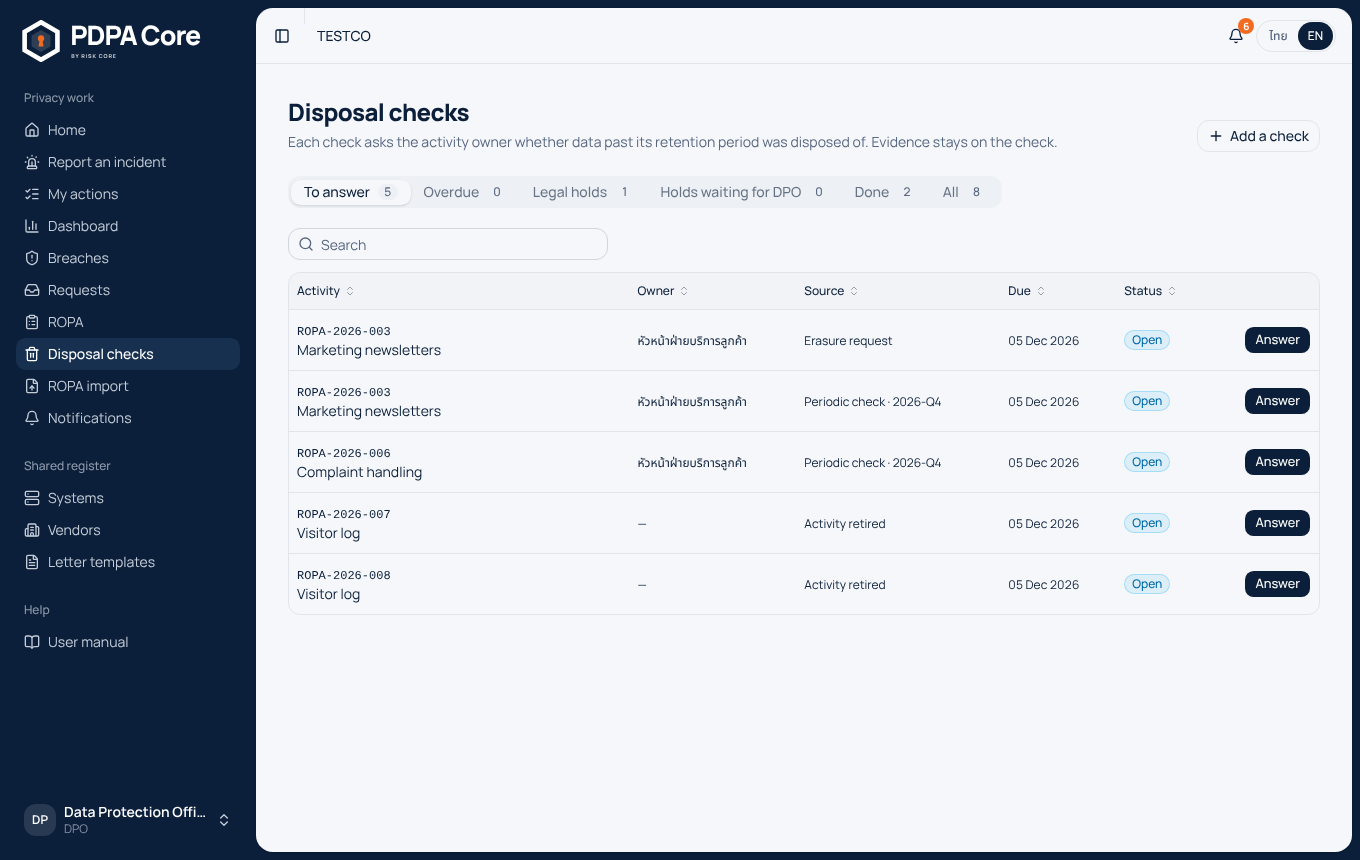
Section titled “Retention and disposal checks”Each activity carries one or more retention rules: the period, when it starts, its basis and the disposal method (delete, destroy, anonymise, return to the controller). The database opens a disposal check for every active activity each cycle (quarterly unless the company sets another frequency), and also when an erasure request is fulfilled, consent is withdrawn or an activity is retired.
The owner answers each check: disposed (method, date, systems, scope, evidence), nothing past retention, or Legal hold (reason and date, approved by the DPO; the check reopens on that date). A check 30 days overdue raises an action. Evidence files are attached to the check and kept.